Atlanta's #1 Property Restoration Company
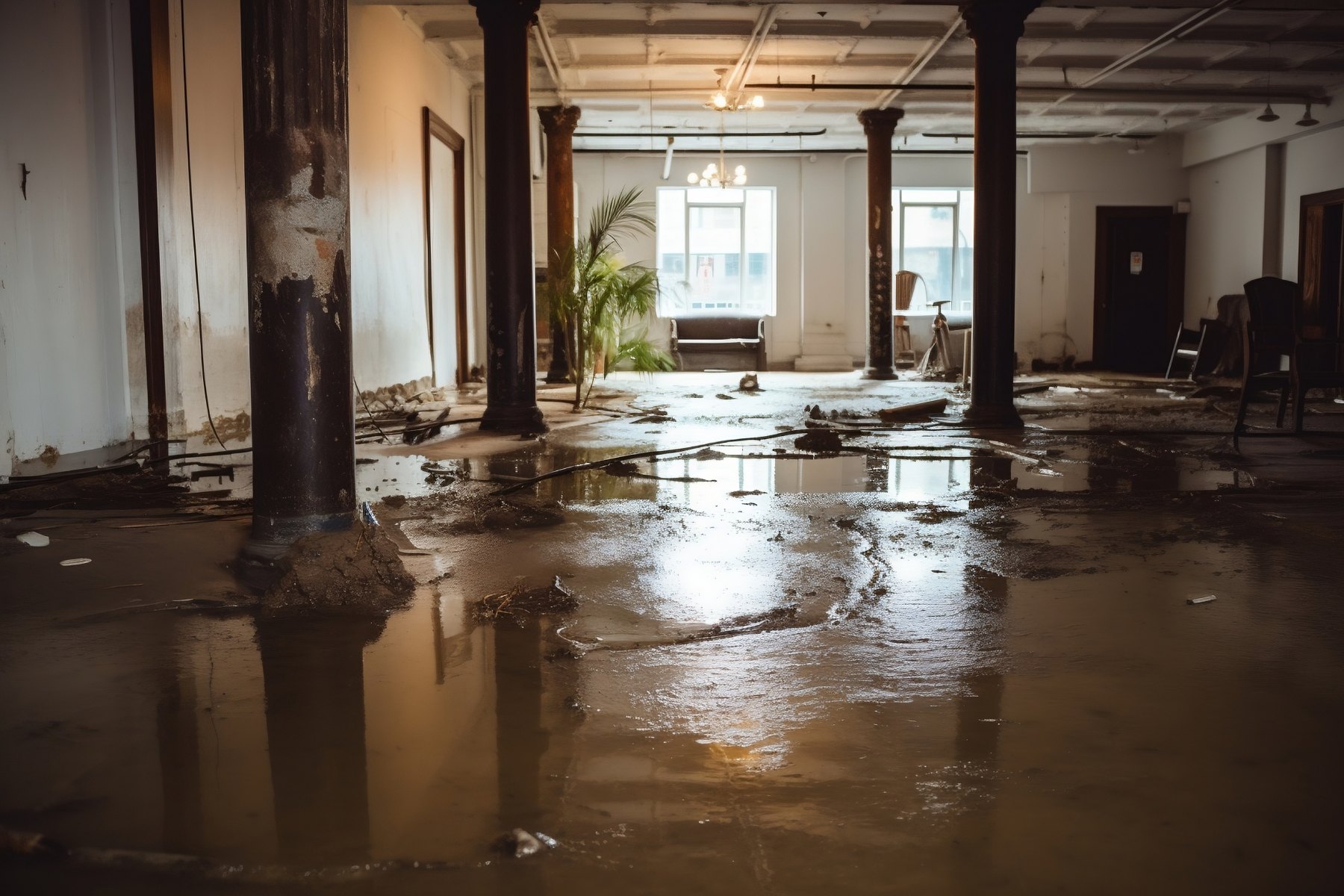
Mold: An Unwelcome Guest
We have all heard mold horror stories. An unsuspecting homeowner, tenant, buyer, or business owner suddenly notices strange odors, unsightly stains, and crumbling building materials on their property. Reports circulate about severe health risks and astronomical repair costs, adding confusion and worry for anyone concerned about needing mold remediation services if it happens to them.
At Rescue Restoration, we help homeowners address their fears about mold head-on, providing information and services they can trust. It starts with clear explanations of how mold forms, spreads, and what you can do about it. When leaks, high humidity, and other indoor water issues come into contact with wood, drywall, dust, and debris, mold can develop in as little as 24 to 48 hours after initial exposure. Hidden leaks or sudden floods often complicate matters, limiting property owners’ ability to respond before mold begins to grow. If the moisture source is not corrected, mold threatens to become a bigger problem, heightening the risk of structural decay on the property and health issues for residents.
Mold remediation is the comprehensive solution to these concerns, providing a pathway for restoration companies like ours to restore your home to its pre-loss condition. The IICRC S520 establishes guidelines, processes, and benchmarks for our certified Georgia home mold remediation technicians to safely and effectively identify, contain, and remove mold. This proven approach helps us:
- Identify and correct any underlying moisture issues leading to mold
- Prioritize the well-being of residents and technicians using PPE (personal protective equipment) and other safety measures
- Prevent the spread of mold with engineering controls, containment, and negative air pressure
- Remove and demolish mold-contaminated building materials, possessions, and furnishings
- Clean the air and surfaces using air scrubbers, HEPA vacuums, and antimicrobial treatments
- Dry remaining moisture with dehumidifiers and air movers
- Verify the efficacy of mold remediation services in Georgia with air quality testing
Steps to Take When Your Property Has Mold
Contact Rescue Restoration, a GA-based mold removal company, to inspect & assess the damage.
1
Mold Inspection and Assessment
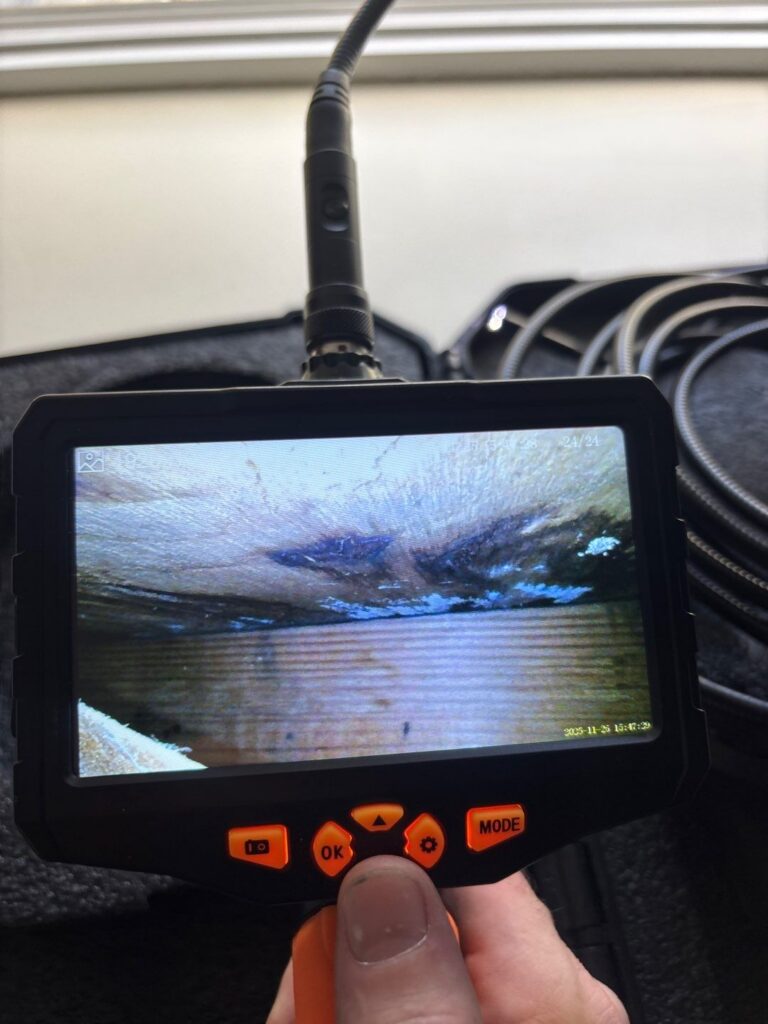
If you suspect you have mold, it is essential to contact a Georgia home mold remediation professional to conduct a mold inspection. Several tools and techniques, including visual inspections, air quality tests, surface sampling, and moisture meters, help us assess and confirm the presence, location, and extent of mold contamination, as well as any contributing water damage.

2
Mold Remediation
We are IICRC and MICRO-certified mold remediation technicians. The IICRC S520 promotes industry-leading practices to help us address the underlying moisture source, contain mold spread, demolish mold-contaminated materials, clean and vacuum mold-affected surfaces, and dry excess moisture.

3
Post-Remediation Verification
Post-remediation verification practices help technicians confirm that the work meets mold removal thresholds. A final air test and visual inspection, along with moisture readings, help confirm the property is ready for reconstruction.
What Causes Mold Damage
Mold needs three conditions to grow: water, food, and oxygen. Indoor water damage is a major driver of mold contamination. When water accumulates in your property over time, organic materials such as wood, drywall, dust, and debris provide an ideal food source for mold. If you eliminate these conditions early, mold has little chance to survive.
Unfortunately, for many home and business owners, mold tends to grow in conditions beyond their control. Sudden water intrusion and hidden leaks either quickly overwhelm or slowly saturate surfaces before homeowners can respond and dry out the damage. Common locations for this type of damage to develop include: around plumbing fixtures, underneath toilets, near HVAC condensate drain lines, behind drywall, and in damp crawl spaces.
If underlying moisture issues are not addressed, embedded mold can persist – even when surface areas are wiped clean. Over time, everyday cleaning activities, fans, and natural airflow can aerosolize mold and spread it to other areas of the property. If you suspect you have mold contamination, it is always recommended to hire a professional mold remediation service.
Early interventions by mold remediation specialists help property owners mitigate the most serious consequences of mold damage, including wood rot, structural damage, diminished air quality, and health issues. If you have mold, contact Rescue Restoration for mold remediation services today!

Why Choose Rescue Restoration
Clear Identification and Careful Mold Remediation
Mold does not always follow a clear and recognizable pattern. One home shows visible spots along a wall. Another has nothing visibly obvious, just a faint odor that does not go away.
A quick wipe-down can make it look better initially. Then it comes back, often in the same area. Sometimes worse. Rescue Restoration follows established IIRC and MICRO-Certified protocols to determine: Where did the moisture start? What areas are affected? What do moisture meters and air quality tests indicate? Has mold spread beyond the initial source? Those answers shape everything that comes next.
| How we handle mold issues | Why it makes a difference |
|---|---|
| Inspect affected areas and track down the moisture source | Mold does not form without a moisture source. If water issues persist, the growth usually returns. |
| Set up containment around the work area | Once disturbed, spores can move. Containment helps limit the spread of mold and protect occupants. |
| Run HEPA air filtration during the process | If disturbed, mold can travel easily through the air. HEPA air scrubbers help remove mold and other contaminants. |
| Remove mold contaminated materials | Some materials cannot be salvaged. Leaving them leads to additional contamination. |
| Clean surfaces with antimicrobial treatments | Treatment helps remove mold and reduce the likelihood of future growth on hard, non-porous surfaces. |
| Carry out independently verified air tests | Air tests help verify the work has been completed according to IICRC-standards. |
Mold creates stressful conditions for homeowners worried about occupant health, soaring remediation costs, and structural integrity.
That is where people get stuck. Many companies may overlook this human impact. Rescue Restoration truly cares about the work we do and the people we serve, communicating transparently about costs and expected outcomes, demonstrating a true understanding of the personal (emotional, financial) costs of property damage, and going out of our way to support you to find the best path to a restored home.
Will My Insurance Cover It?
Insurance typically only covers mold when it results from a sudden AND accidental water event, or a covered peril, such as a sudden pipe burst or a malfunctioning appliance. Insurance usually does not cover mold caused by long-term plumbing leaks, deferred home maintenance, high humidity, or poor ventilation.
Get Started NowFAQs
Trained mold remediation specialists should handle mold removal. Failure to address the underlying moisture source and remediate mold effectively causes issues to recur over time. Handymen lack the training and certification to contain mold and protect themselves and residents from exposure safely. Disturbing mold by targeting fans or wiping the affected area can aerosolize mold. Without proper engineering protocols, cross-contamination in other areas of the home can occur.
In situations where growth is limited or contained, residents may be able to remain in the home while mold remediation is carried out. However, if a large area, such as the entire floor of a residence, is affected, residents must relocate during remediation.
Rescue Restoration is a MICRO-Certified Mold Inspector and Mold Remediation Contractor.
Yes, molds can produce a range of allergens, irritants, and potentially toxic substances. Inhaling or touching molds may cause allergic reactions in sensitive individuals, particularly those with asthma. If you suspect mold is making you sick, we always recommend a verified third-party air quality test to assess mold levels in your home or business.
An air quality test helps detect mold spores in the air. Indoor air samples are collected in each room where suspected mold contamination has occurred, along with an outside air sample as a control. The samples are then sent to a lab, which produces a report showing the type and quantity of mold spores in each sample. Indoor spore counts should always be a small percentage of outside air spore counts. For molds like Stachybotrys and Chaetomium, no presence is acceptable, as these mold types produce mycotoxins that can cause serious health problems.