Atlanta's #1 Property Restoration Company
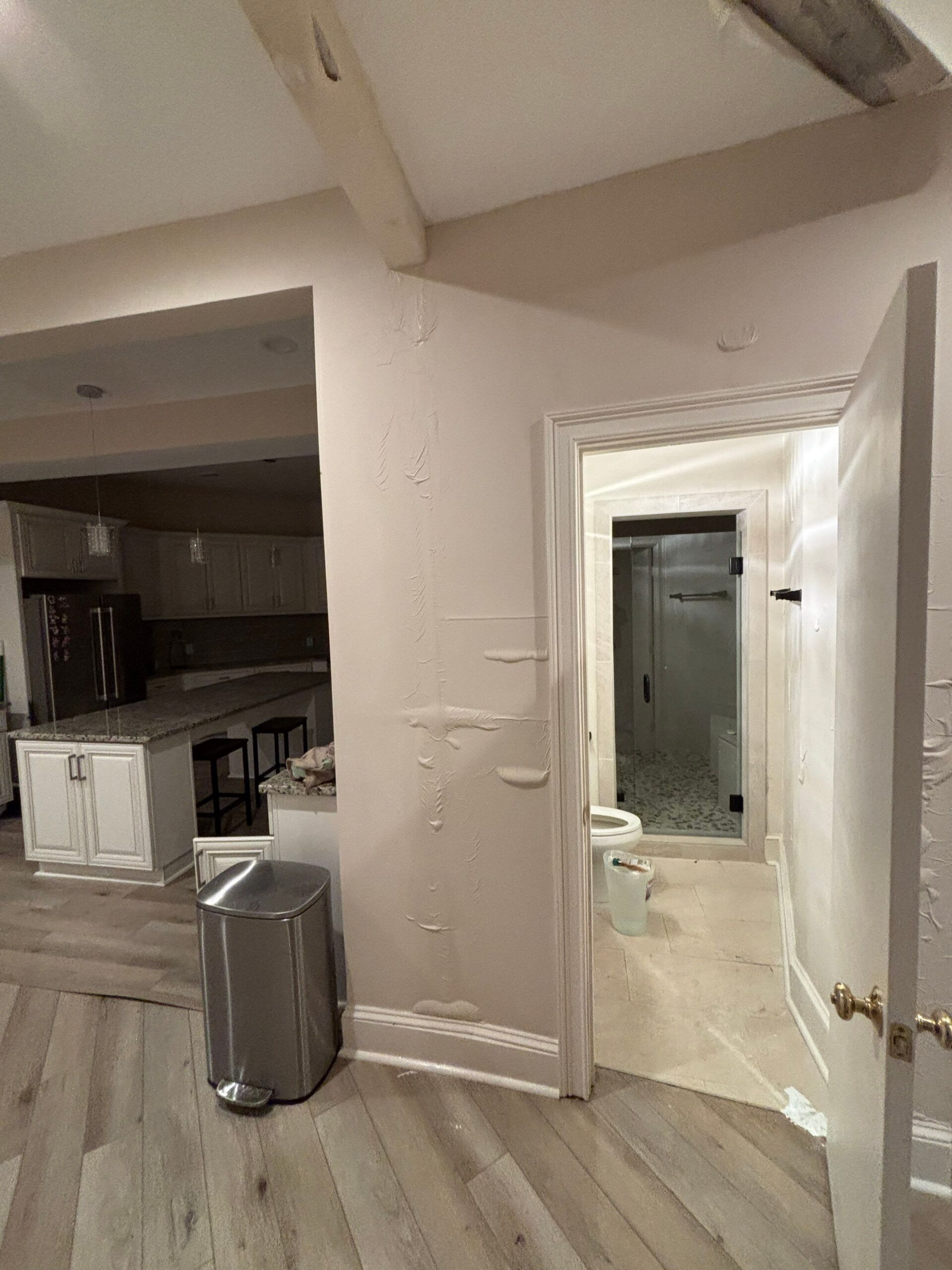
A leaking pipe, an overflowing appliance, a roof leak, or a flood may leave an obvious puddle on the floor or stain on the wall, but the water you can see does not always reveal the full extent of the problem. Moisture can damage drywall, insulation, framing, flooring, ceilings, and other concealed building materials and create conditions for mold and structural issues.
So, how do you know if water damage has spread behind walls? Sometimes the clues are visible: staining, bubbling paint, warped drywall, or a musty odor. In other cases, specialized moisture-detection equipment is needed to determine whether an apparently dry wall is actually holding moisture beneath the surface.
Rescue Restoration’s water damage restoration services focus on delivering complete restoration from initial assessment to drying and reconstruction.
Concerned about water damage? Understanding the warning signs can help you determine the appropriate next steps.
What Does Water Damage Behind Walls Look and Smell Like?
What does water damage behind walls look and smell like? The answer varies depending on the water source, how long the materials have remained wet, and the type of wall construction involved.
Possible signs include:
- Brown, yellow, or dark discoloration on drywall or ceilings
- Paint that bubbles, flakes, or peels
- Wallpaper that begins separating from the wall
- Drywall that feels soft, swollen, or uneven
- Warped trim or baseboards
- Cracking or rippling around wall surfaces
- Damp or musty odors
- Mold appearing along walls, ceilings, baseboards, or nearby flooring
The Environmental Protection Agency specifically recommends taking action on signs such as rippling wall coverings, cracked drywall tape, peeling paint, and musty odors because they can indicate leaks and concealed moisture or mold. The EPA also identifies behind-wall areas as locations that are frequently overlooked after water intrusion.
The absence of stains does not necessarily mean the wall is dry. Water can travel through insulation, along framing members, behind cabinets, or downward from the original leak before it produces a visible change in surface appearance.
How to Inspect Walls for Water Damage After Flooding or Roof Leaks
Knowing how to inspect walls for water damage after flooding or roof leaks starts with professional training and certification.
After a roof leak, water may move through attic insulation, ceiling materials, wall cavities, and framing. After flooding, moisture can quickly damage drywall and insulation.
We begin by visually inspecting areas near the known or suspected source. Our team inspects:
- The wall directly below a roof or ceiling leak
- Adjacent walls and corners
- Baseboards and flooring
- Areas beneath windows
Homeowners should avoid assuming that a wall is dry simply because it feels dry to the touch. Surface evaporation can occur while moisture remains deeper inside an assembly.
If you suspect you have water damage, professional water damage restoration providers can look deeper with moisture monitors, infrared cameras, and trained visual assessment practices rather than relying on the presence of visible damage.
Non-Invasive Ways to Detect Water Behind Walls
Homeowners understandably want to avoid opening drywall unless necessary. Fortunately, there are several non-invasive ways to detect water behind walls before demolition is considered.
Professional restoration contractors may begin with a visual inspection, moisture meters, thermal imaging, or a combination of all three.
A pinless moisture meter can scan a material without penetrating the wall surface. These tools are useful for identifying elevated moisture beneath the surface and helping inspectors narrow down areas that require additional investigation.
Thermal imaging offers another non-destructive method. An infrared camera scans surface temperatures and can highlight patterns that warrant closer investigation.
However, there is an important distinction: a thermal camera does not literally see through a wall or directly measure water. It detects surface temperature differences that can sometimes be caused by moisture. FLIR, one of the leading manufacturers of infrared cameras, recommends confirming suspected moisture anomalies with moisture measurements rather than treating a thermal image alone as proof of water intrusion.
That is why professional inspections often rely on multiple tools rather than a single reading.
Moisture Meter vs Thermal Imaging for Detecting Wall Water Damage
When comparing a moisture meter vs thermal imaging for detecting wall water damage, it is helpful to think of the tools as complementary rather than interchangeable.
Thermal Imaging
A thermal camera is particularly useful for scanning a larger wall or ceiling area. Changes in evaporation and thermal conductivity can create surface-temperature patterns that indicate where further testing may be appropriate.
For example, FLIR notes that water migrating down a wall can sometimes create recognizable thermal patterns. Flood-related moisture may also appear as water wicking upward through wall assemblies. Still, the manufacturer stresses that thermal cameras detect temperature differences—not moisture itself.
Moisture Meters
Moisture meters evaluate moisture conditions within or beneath building materials.
Pinless meters can scan without puncturing the wall, while other meter configurations may allow technicians to obtain more targeted readings when deeper investigation is necessary. These readings can also be compared across different sections of the wall and against unaffected materials.
Professional moisture mapping can help document the boundaries of affected areas and track changes as drying progresses.
In practice, thermal imaging can help identify where to look, while moisture measurements help technicians investigate and confirm whether abnormal moisture conditions are actually present.
Rescue Restoration uses moisture meters and infrared cameras as part of its water damage assessment process, followed by a full IICRC S500-based water damage mitigation process to ensure affected areas have reached appropriate drying conditions.
Can Mold Grow Behind Walls After Water Damage?
Can mold grow behind walls after water damage? Yes. Concealed wall cavities can provide the moisture and organic materials mold needs to develop, particularly when drywall, wood framing, insulation, dust, and other materials remain damp.
The EPA advises that wet areas should generally be dried within 48 hours to help prevent mold growth and specifically calls attention to hidden locations such as walls, ceilings, crawl spaces, and attics.
A musty smell with no visible source is one reason to suspect hidden mold. Mold can develop anywhere water, oxygen, and a food source are present.
When mold is suspected, simply painting over a stain or drying the exposed surface does not address contamination inside the wall.
Rescue Restoration’s mold remediation services focus on identifying underlying moisture problems, containing affected areas, addressing mold-contaminated materials, cleaning affected surfaces and air, and verifying conditions with third–party air testing after remediation.
When Should You Call a Professional for Water Damage Behind Walls?
When should you call a professional for water damage behind walls? Professional assessment is especially valuable when the extent of the water damage is unclear or when water may have entered concealed building assemblies.
Consider calling a restoration professional when:
- A pipe has burst
- Water has entered through a roof and traveled into ceilings or walls
- A room has flooded
- You smell persistent musty odors
- Flooring or baseboards are warping
- Mold is visible
- Water is pooling near HVAC systems and water heaters
- A leak occurred while you were away
Prompt action is important any time you suspect you have water damage. Hidden areas can remain damp even after fans or household dehumidifiers make the room itself feel dry.
Rescue Restoration provides emergency water restoration in Atlanta for any size water loss.
Why Moisture Mapping Matters During Professional Restoration
Finding the initial wet area is only the beginning. Restoration professionals also need to determine the boundaries of the loss.
Moisture mapping involves taking readings at multiple points across affected and unaffected materials. These measurements can show how water migrated and establish comparison points for monitoring the drying process.
That matters because reconstruction should not begin merely because drywall looks dry. Remaining moisture can contribute to continued material deterioration or mold growth.
Professional documentation of the process is important during an insurance claim. Rescue Restoration helps homeowners navigate the insurance claims process and can provide free resources such as a damage insurance guide covering restoration and insurance considerations, including the importance of addressing water losses before secondary damage develops.
Latest Water Damage Restoration Standards for Hidden Moisture Detection 2026
Homeowners searching for the latest water damage restoration standards for hidden moisture detection 2026 should know that, as of 2026, the ANSI/IICRC S500 Standard for Professional Water Damage Restoration remains the primary consensus-based procedural standard used by the restoration industry.
The current U.S. edition is the fifth edition published in 2021. The IICRC has begun revising that standard, but a replacement edition has not yet been published.
The S500 framework covers areas such as inspections, preliminary determinations, drying technology, instruments and equipment, documentation, structural restoration, and the evaluation of building materials.
The IICRC also issued a 2026 position statement clarifying how weather-related water losses should be categorized. Importantly, it reinforces the role of inspection and information gathering in evaluating the actual conditions at a water-loss site rather than making assumptions based solely on how the water entered the property.
For homeowners, the practical takeaway is straightforward: a professional water damage assessment should look beyond visible stains. It should identify where moisture traveled, evaluate affected materials, establish appropriate drying procedures, monitor changing conditions, and verify results before the project advances.
Do Not Let Hidden Water Become a Bigger Problem
Water behind a wall is easy to underestimate because much of the damage develops out of sight. A small discoloration may represent a larger wet area, while a wall that appears normal may still contain moisture.
Visual inspection provides useful clues, but moisture meters, thermal imaging, moisture mapping, and professional experience can provide a much clearer picture of what is happening beneath the surface.
If you suspect a pipe leak, roof leak, flood, appliance failure, or another water event has spread into your walls, contact Rescue Restoration to speak with an expert and schedule an assessment. Identifying hidden moisture early can help establish the appropriate drying plan and reduce the risk of an unseen water problem developing into more extensive property damage.
